Power Book III: Raising Kanan Brilliant, Bold and Unmissable Across All 5 Seasons
A detailed, honest review of every season from Kanan Stark’s raw beginnings in South Jamaica, Queens to the shocking finale that ties it all back to the original Power legend.
Series At a Glance
| Movie Name | Power Book III: Raising Kanan |
| Tagline | The truth hurts |
| Genres | Crime, Drama |
| Certificate | TV MA |
| Country | United States |
| Language | English |
| Network | Starz / StarzPlay |
| Production | G Unit Film & Television, Lionsgate TV, Atmosphere Entertainment MM, Canton Entertainment, End of Episode |
| Special Effects | Alkemy X |
| Tech Specs | Color · Dolby Digital |
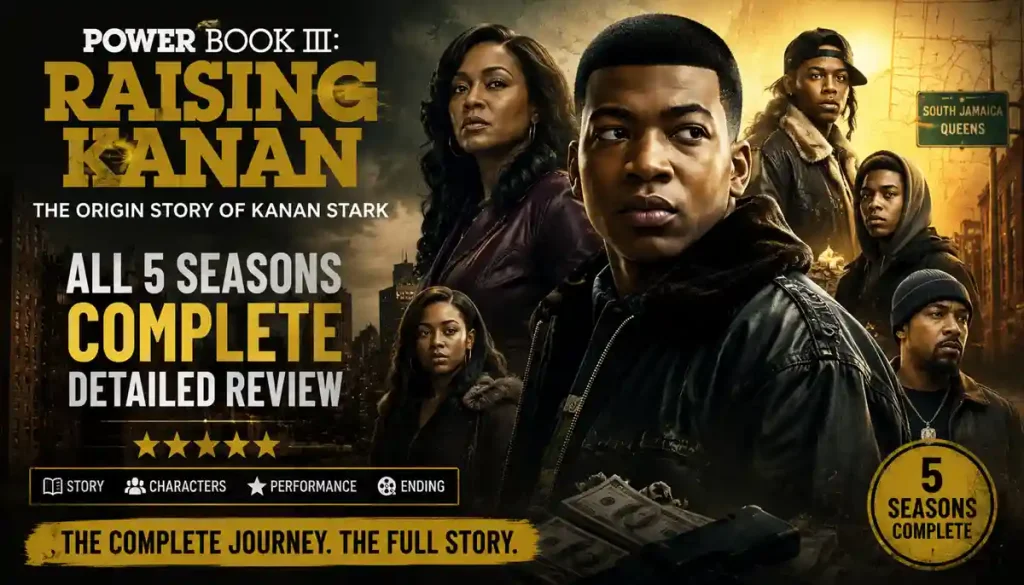
What Is Power Book III: Raising Kanan?
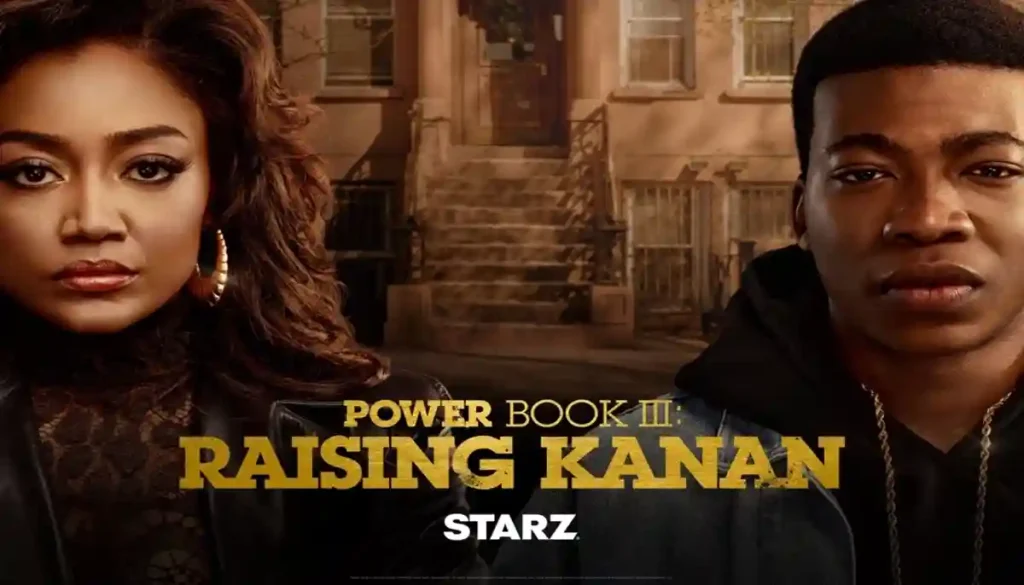
If you’ve ever watched the original Power series and wondered what made Kanan Stark the cold, calculating villain he became this show is your answer. Power Book III: Raising Kanan is a prequel set in the early 1990s in South Jamaica, Queens, New York. It follows a teenage Kanan Stark as he steps into the drug game under the guidance of his mother, the fierce and brilliant Raquel Raq Thomas.
Created by Sascha Penn, the series is a proud part of the larger Power Universe, which began with the original Power (2014–2020). Unlike some of the other spinoffs, Raising Kanan has a very distinct energy. It feels grounded, personal and emotionally complex in a way that few crime dramas manage to pull off.
The show stars Mekai Curtis as young Kanan and Patina Miller as Raq Thomas and honestly, both performances are among the best in the entire Power franchise. Curtis brings a quiet intensity to Kanan that perfectly explains how this teenager eventually becomes the hardened man we know from the original series.
The truth hurts and Raising Kanan doesn’t flinch from that truth for a single episode across its entire run.
Full Cast & Key Characters
The ensemble cast is one of the biggest strengths of this series. Every major character has their own compelling arc and the performances are consistently outstanding across all five seasons.
Kanan Stark
Mekai Curtis
The heart of the show. A teenager navigating loyalty, identity and the pull of the streets.
Raq Thomas
Patina Miller
Kanan’s mother and the most powerful drug queenpin in Queens. Complex, ruthless and deeply human.
Unique
Joey Badass
Raq’s rival and a complex antagonist whose story evolves dramatically across the seasons.
Jukebox
Hailey Kilgore
Kanan’s cousin and one of the most emotionally resonant characters in the entire franchise.
Marvin Thomas
London Brown
Raq’s brother. His redemption arc is one of the most surprising and moving in the series.
Lou Lou
Malcolm M. Mays
The youngest Thomas sibling, torn between music dreams and the family business. Raw and heartbreaking.
Howard
Omar Epps
A detective with deep ties to the Thomas family and a hidden secret that reshapes everything.
Crown Camacho
Woody McClain
A Bronx player who becomes a major force in the later seasons as rivalries escalate.
Beyond the main cast, the show features strong work from Tony Danza as mob figure Lou Lou’s music connection, Shanley Caswell, Aliyah Turner, Christiani Pitts, Antonio Ortiz, Rosal Colon, John Clay III, Brandon Espinoza, Natalee Linez, Toby Sandeman and Sharon Washington. Every supporting role feels purposeful and richly drawn.
Love Island 2026: The Ultimate Exciting Guide to Contestants, Couples and Voting
Power Book III: Raising Kanan Season by Season Review
Season 1 (2021) The Origin Story That Hooked Everyone
The first season of Power Book III: Raising Kanan is a confident, bold debut. Set entirely in 1991 South Jamaica, Queens, it wastes no time establishing the world. We meet Kanan as a wide eyed teenager who idolizes his mother without fully understanding what she does. When he discovers the truth about Raq’s empire, everything changes.
What makes Season 1 special is how it resists the easy path. This isn’t a glamorized crime fantasy it’s a genuine portrait of how the environment, the family and the circumstances push a young person toward choices they can’t take back. Mekai Curtis is revelatory from the very first episode. His portrayal of Kanan’s slow transformation from a curious, somewhat innocent kid into someone willing to cross moral lines is one of the finest character introductions in modern TV drama.
Patina Miller’s Raq Thomas immediately becomes one of the most compelling female leads in the crime drama genre. She isn’t just a tough woman in a man’s world stereotype she’s a fully realized human being with love, strategy, fear and ambition all fighting for space inside her. The pilot episode alone makes her one of the best characters in the Power Universe.
Season 1 also does excellent work establishing the secondary characters. Jukebox’s storyline gives the show emotional depth that goes beyond the crime drama genre. Howard’s complicated relationship with the Thomas family introduces a tension that won’t fully resolve for several seasons. And Marvin, played brilliantly by London Brown, gives us comedy, danger and heart all at once.
Season 1 · 2021
Verdict: A Stunning Debut
Exceptional world building, brilliant performances and a story that immediately stands apart from the rest of the Power franchise. 9.2 / 10
Season 2 (2022) Escalation and Emotional Depth
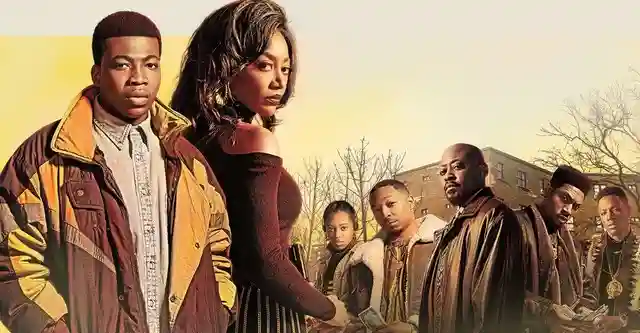
If Season 1 was the origin story, Season 2 is where the show finds its fullest voice. The stakes get higher, the alliances get more dangerous and the characters become even more layered. Raq’s empire expands aggressively, which means more enemies, more risk and more devastating consequences for everyone in the Thomas family.
Season 2 is where Kanan’s story really starts to mirror the original Power narrative in subtle, heartbreaking ways. You start to understand the exact experiences that will one day produce the Kanan Stark of the original series. Every betrayal, every loss, every hard lesson lands with real weight because the writers and Mekai Curtis do such careful, patient work with the character.
Lou Lou’s arc in Season 2 is among the most emotionally affecting storylines in the entire show. His dream of making it in the music industry, his love for his family and the impossibility of fully leaving the life he was born into it’s genuinely painful to watch. Malcolm M. Mays carries it beautifully.
The introduction of new power players and the deepening of Unique’s rivalry with Raq adds real suspense. Joey Badass continues to surprise anyone who came to the show expecting a rapper doing a cameo he’s a genuine screen presence.
Season 2 · 2022
Verdict: The Show Finds Its Rhythm
Richer, deeper and more emotionally ambitious than Season 1. One of the best crime drama seasons in recent memory. 9.4 / 10
Season 3 (2023) Power Shifts and Personal Costs
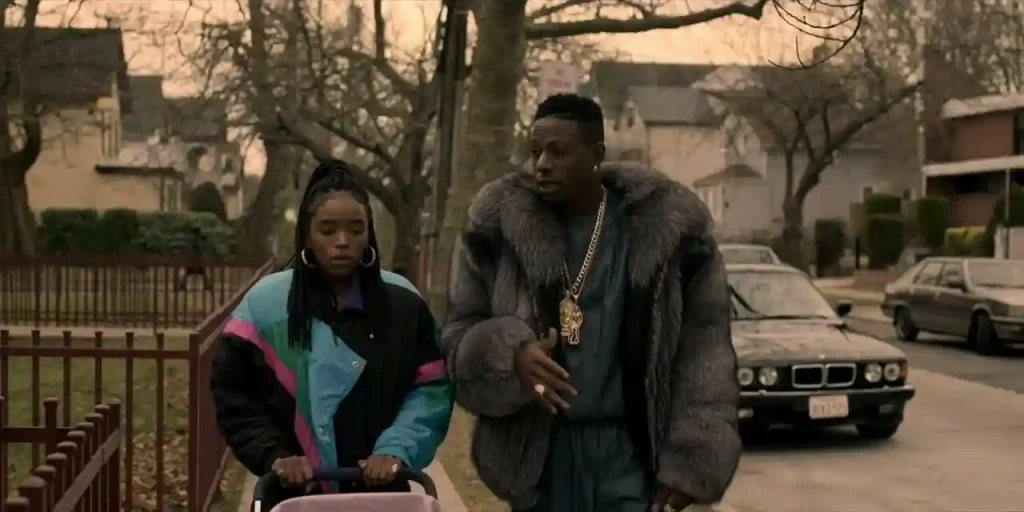
Season 3 is where the series leans hard into the consequences of power and the costs of loyalty. Without giving too much away, this season delivers several genuinely shocking moments that redefine relationships you thought you understood. The Thomas family is tested in ways that go beyond business it becomes deeply personal.
Howard’s arc reaches a dramatic turning point that reframes everything that came before it. Omar Epps delivers some of his best ever work in these episodes. The performance is quiet, restrained and absolutely devastating in the right moments.
Kanan continues to harden. By the midpoint of Season 3, you can genuinely see the DNA of the original Power’s Kanan Stark forming. The writers walk a careful line here they’re not rushing toward the inevitable but they’re not pretending it isn’t coming either.
One criticism of Season 3 is that some of the supporting storylines occasionally slow the pace. A few subplots feel stretched. But the core narrative Raq vs. the world, Kanan vs. his own conscience remains riveting throughout.
Season 3 · 2023
Verdict: Intense and Emotionally Brutal
Slightly uneven pacing in places but the core story delivers moments of genuine dramatic power that elevate the whole series. 8.8 / 10
Season 4 (2024) The Walls Close In
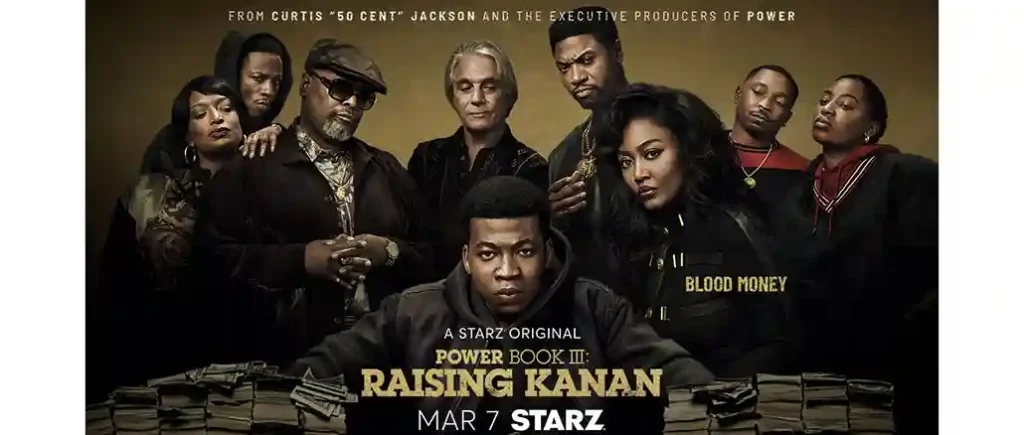
Season 4 feels like the show gathering itself for a final sprint. The Thomas empire is under threat from multiple directions simultaneously and for the first time, it genuinely feels like the family might not survive at least not intact. Raq is playing chess while everyone else seems to be playing checkers but even the smartest player can be outmaneuvered.
This season does exceptional work with Marvin’s story. His journey toward something resembling redemption or at least self awareness is one of the most quietly powerful arcs in the whole series. London Brown, who has always been a scene stealer, gets real dramatic material to work with here and delivers accordingly.
The pacing in Season 4 is much tighter than Season 3. Nearly every episode ends in a way that makes you immediately want to watch the next one. The show had found a confidence and momentum by this point that felt genuinely exciting.
Jukebox’s story continues to evolve in ways that feel true to the character while also setting up significant payoffs for the final season. Her relationship with Kanan, always the emotional core of the show in many ways, reaches a new and complicated place.
Season 4 · 2024
Verdict: A Focused, Urgent Season
Tight plotting, excellent character work and a sense of gathering inevitability that makes it near impossible to stop watching. 9.0 / 10

Season 5 (2025) The Final Chapter
Season 5 of Power Book III: Raising Kanan is the series finale and it delivers. This final chapter has the unenviable task of satisfying five years of storytelling while also connecting the dots back to the original Power series in ways that feel earned rather than forced. On both counts, it largely succeeds.
The finale episodes deal directly with the question the show has been circling since the very first episode how does a kid with love in his heart become a man like Kanan Stark? The answer the show provides is not simple, not neat and not comfortable. It’s the right answer.
Raq’s final arc is extraordinary. Patina Miller plays the endgame of this character with total commitment and there are moments in the final season that rank among the finest acting in any drama series in recent years. Her last scene is the kind of moment you talk about for a long time afterward.
Some fans felt the finale moved too quickly through certain plot threads and it’s a fair criticism. Five seasons of carefully constructed mythology can’t all land perfectly in a final run of episodes. But the emotional truth of the ending what happens to Kanan, what Raq’s choices ultimately cost her and where all the pieces finally rest feels genuinely satisfying.
The show’s connection to the original Power is handled with intelligence. It doesn’t over explain or fan service its way to the link. It trusts the audience to feel the weight of what they’ve just watched.
Season 5 · 2025 Final Season
Verdict: A Fitting, Emotional Send Off
Not perfect but powerful. A finale that honors the characters, the story and the audience that has invested in this world. 9.0 / 10
All 5 Seasons Comparison Table
Here’s a detailed breakdown of all five seasons at a glance, including key story focus, standout cast performances and our critical score.
| Season | Year | Story Focus | Standout Performer | Tone | Score | Ranking |
| Season 1 | 2021 | Kanan discovers Raq’s empire; chooses the life | Mekai Curtis & Patina Miller | Origin / Discovery | 9.2 / 10 | #2 |
| Season 2 | 2022 | Empire expands; family bonds fracture; Unique war | Malcolm M. Mays (Lou Lou) | Escalation / Heart | 9.4 / 10 | #1 Best |
| Season 3 | 2023 | Power shifts; Howard’s secret changes everything | Omar Epps (Howard) | Revelations / Cost | 8.8 / 10 | #5 |
| Season 4 | 2024 | Thomas family under siege; Kanan hardens fully | London Brown (Marvin) | Urgency / Stakes | 9.0 / 10 | #3 |
| Season 5 | 2025 | Final reckoning; Kanan’s transformation complete | Patina Miller (Raq) | Conclusion / Legacy | 9.0 / 10 | #4 |
Character Deep Dives
Kanan Stark’s Rise to Power
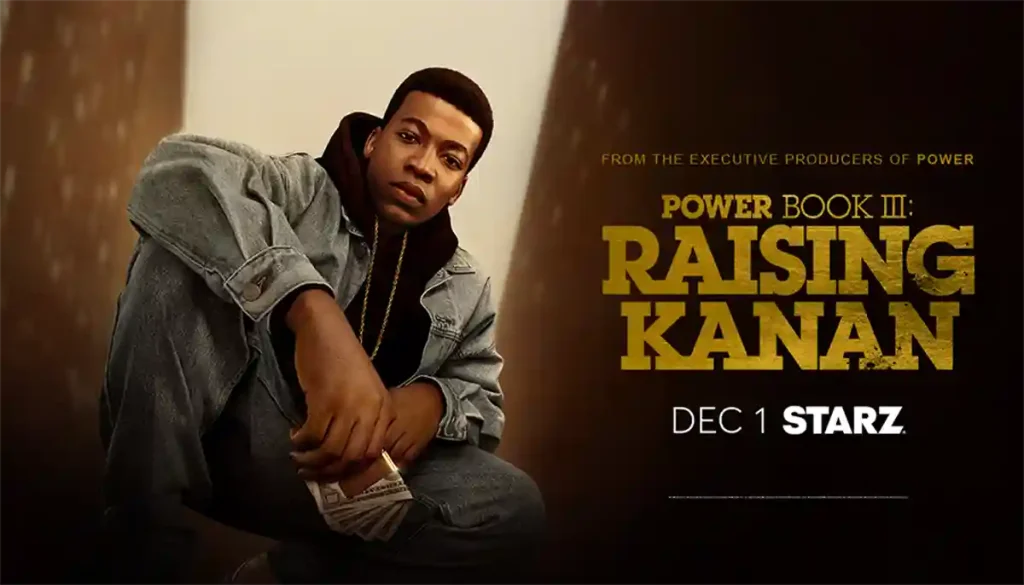
What Power Book III: Raising Kanan does better than almost any other prequel series is show us a transformation in real time without ever making it feel rushed or unearned. Mekai Curtis plays Kanan with such careful attention to detail that you genuinely believe in every step of his journey.
In Season 1, he’s curious but still innocent. In Season 2, he’s making choices he can’t fully take back. By Season 3, something behind his eyes has shifted. By Seasons 4 and 5, you can see the original Power’s Kanan Stark beginning to emerge cold, calculating but still carrying wounds from the life that made him this way.
Raq’s Influence on Kanan
The relationship between Raq and Kanan is the emotional center of the entire series. Raq loves her son completely and that love is precisely what makes her so dangerous to him. Every decision she makes, she frames as protection. But the show consistently challenges that framing, asking the audience whether love that destroys a person’s soul can still be called love at all.
Patina Miller plays this tension with extraordinary intelligence. She never lets Raq become a simple villain. Even when Raq is at her most ruthless and she is genuinely ruthless you understand her, if not always excuse her.
Unique’s Story Arc
Joey Badass came in as Unique with the potential to be a one dimensional antagonist and instead delivered one of the show’s most complex character journeys. Unique starts as Raq’s rival, evolves into something more complicated and ends up in a place nobody could have predicted in Season 1. It’s a credit to the writing and to Badass’s natural screen presence.
Jukebox Character Journey
Jukebox, played by Hailey Kilgore, is one of the most important characters in the show for what she represents the possibility of a different path. Her relationship with Kanan is the show’s deepest human connection and Kilgore brings real vulnerability and strength to the role. Her storyline across all five seasons is among the most emotionally affecting in the entire Power Universe.
Marvin’s Redemption Story
London Brown’s Marvin starts the series as comic relief with an edge of real danger. Over five seasons, he becomes something far more complex. His arc across the later seasons grappling with regret, trying to protect those he loves and confronting who he’s become is quietly magnificent. Brown’s transformation of the character is one of the real acting achievements of the series.
Lou Lou’s Struggles
Lou Lou represents the road not taken the family member who wanted out, who had real talent and real dreams and who could never quite escape. Malcolm M. Mays brings an ache to the role that makes Lou Lou’s storyline genuinely difficult to watch at times. It’s the kind of performance that elevates the whole show around it.
Story Analysis and Themes
On the surface, Power Book III: Raising Kanan is a crime drama about the drug trade in early 1990s Queens. But underneath that, it’s a story about several larger, deeply human questions.
Family and fate: Can you escape the family you were born into? Does the love of a parent protect or trap? The Thomas family dynamic explores both of these questions simultaneously and the answers the show provides are neither simple nor comforting.
Identity and choice: The series is fundamentally about the moment a person becomes who they’re going to be. Every season adds another layer to Kanan’s formation and the accumulation of those moments is what gives the finale its genuine emotional weight.
Power and its costs: The tagline The truth hurts captures something essential about the show’s moral landscape. Every character who gains power in this world pays for it in ways they didn’t anticipate. Nobody wins cleanly. It’s a sobering, honest portrait of what the pursuit of power actually does to people.
Community and loyalty: The series does excellent work showing the neighborhood itself as a character. South Jamaica, Queens in the early 1990s is richly evoked the music, the fashion, the economics, the relationships between neighbors and rivals. This specificity of place and time gives the show a depth that many crime dramas lack.
How Raising Kanan Connects to Power Origins
One of the ongoing pleasures of watching Power Book III: Raising Kanan is the way it layers in connections to the original Power series without making those connections feel like cheap fan service. The show is confident enough in its own storytelling to trust that those moments will land when they come.
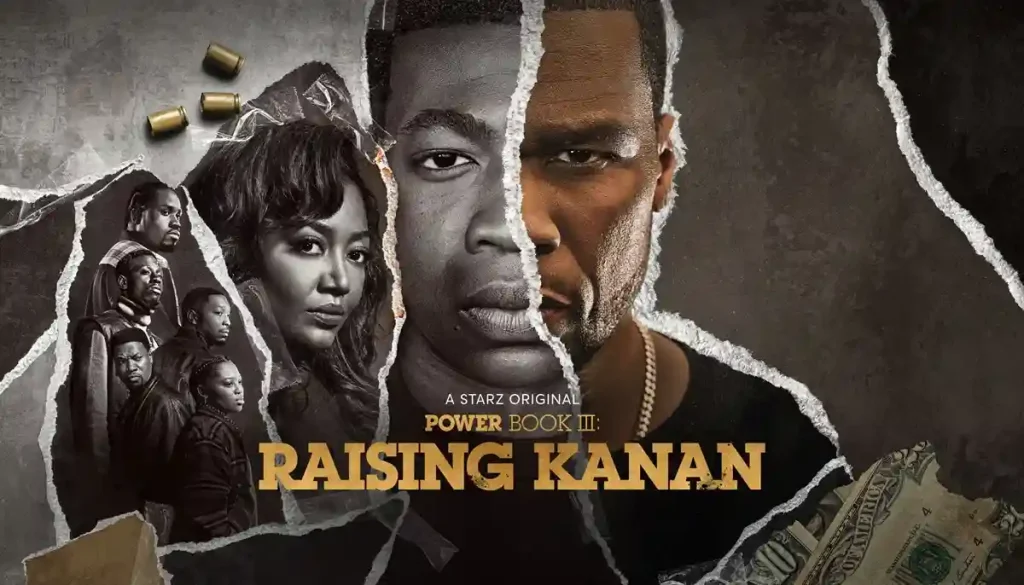
The personality we see forming in Mekai Curtis’s young Kanan is entirely consistent with the character Fifty Cent embodied in the original Power. The paranoia, the ruthlessness, the specific way he holds his emotions close all of it makes sense in the context of what we see in the prequel.
The show also helps explain the Power franchise’s larger mythology around what the drug trade in New York looked like in the era before the original series’ events. It’s effective world building that adds texture to the whole franchise without demanding that new viewers have seen the original series first.
Best Episodes Across All 5 Seasons
Picking the very best episodes from fifty plus hours of television is always difficult but a few stand out as genuine high water marks for the series as a whole.
The Season 1 episode in which Kanan makes his first truly irreversible choice is one of the finest single episodes in recent crime drama history. The way it’s constructed quiet, deliberate, without any of the musical or editing shortcuts that lesser shows would rely on shows the writers at their most confident.
Lou Lou’s pivotal Season 2 episode is another high point, managing to be devastating and inevitable at the same time. You know where it’s heading before it arrives but you still feel the impact fully when it does.
Howard’s revelation episode in Season 3 is constructed like a thriller and pays off like a drama one of the cleverest structural choices in the whole series. Omar Epps is extraordinary throughout.
Raq’s final episode in Season 5 is simply one of the best pieces of acting in a drama series in recent years. Patina Miller gives everything she has and the result is a scene that will genuinely stay with you.
Best Villains in the Series
The most interesting thing about the villains in Raising Kanan is that the show refuses to let them be simply evil. Unique is the clearest example a man who does terrible things for reasons the audience comes to understand, even if they can’t condone them.
Crown Camacho, introduced in later seasons, is another compelling antagonist smart, charismatic and genuinely dangerous. The confrontations between Crown and Raq are some of the most entertaining and suspenseful scenes in the back half of the series.
But perhaps the most unsettling villain in the series is Raq herself a woman whose love for her son is entirely genuine and who uses that genuine love to do genuinely monstrous things. It’s a complicated moral portrait and the show never lets you settle comfortably into one reading of her.
Donald Gibb: The Incredible Rise of a Cult American Actor 10 Surprising Facts You Never Knew
Most Shocking Deaths and Moments
The show has real courage when it comes to consequences. Characters you’ve invested in across multiple seasons can be taken off the board suddenly, with the same brutal randomness that the real world operates on. The writers never use death as mere shock value every significant loss reshapes the story and the characters around it.
Without spoiling specific events, it’s worth noting that several Season 5 moments earned genuine audience responses not often seen in television drama. The writing, the performances and the direction all come together in ways that feel completely earned by the five years of storytelling that preceded them.
Season Rankings From Best to Worst
Based on storytelling quality, character development, pacing and emotional impact, here’s how the five seasons rank against each other.
Rank #1
Season 2
The most fully realized season. Perfect balance of crime drama tension and emotional depth.
★ 9.4
Rank #2
Season 1
A stunning debut. Establishes the world and characters with rare confidence.
★ 9.2
Rank #3
Season 4
Tight, urgent and impossible to stop watching. Strong character payoffs.
★ 9.0
Rank #4
Season 5
An emotionally satisfying finale that honors five years of storytelling.
★ 9.0
Rank #5
Season 3
Uneven pacing but delivers key revelations. Still far above most TV dramas.
★ 8.8
Season 5 Final Ending Explained
The final season of Power Book III: Raising Kanan has one central task: completing Kanan’s transformation from the boy we met in Season 1 to the man we know from the original Power series. It accomplishes this through a series of devastating personal losses and choices that peel away the last layers of whatever innocence or hope he had been holding onto.
Raq’s endgame is the most affecting part of the finale. After five seasons of controlling every outcome and protecting her empire above all else, she finally faces consequences she cannot outmaneuver. The resolution of her story is both entirely consistent with who she’s been and genuinely surprising in its specifics.
The final image of Kanan is deliberately ambiguous the show doesn’t hand you a bow tied conclusion. Instead, it leaves you with the emotional truth of what this person has become and why, trusting you to carry the weight of that understanding forward as you return, if you choose, to the original Power with entirely new eyes.
For fans of the franchise, the connective tissue in the finale the moments that directly link this story to the events of Power land with real impact. They don’t feel forced or obligatory. They feel earned.
Is Raising Kanan Worth Watching? Honest Assessment
Yes. Without qualification. Power Book III: Raising Kanan is not just worth watching it is one of the finest crime drama series of the 2020s and arguably the strongest entry in the entire Power franchise.
You do not need to have watched the original Power series to enjoy Raising Kanan. The show works completely on its own terms. However, if you have watched the original, the experience is enormously enriched. Every callback, every familiar beat, every echo of the character you know from the original series hits differently when you understand the full story of how Kanan became who he is.
The show is not perfect. Season 3 has some pacing issues. The finale doesn’t resolve every thread as cleanly as some fans might have hoped. There are occasional subplots in the middle seasons that feel like distractions from the main story.
But its strengths are extraordinary. The performances especially from Curtis, Miller, Mays, Brown, Epps and Kilgore are uniformly excellent. The production values are high throughout. The 1990s period setting is evoked with remarkable attention and love. And at its best, the show asks genuinely difficult questions about family, love, ambition and identity that crime dramas rarely attempt.
Final Verdict
9.1 / 10 : Complete Series · Score · All 5 Seasons
Power Book III: Raising Kanan earns its place as one of the best crime dramas of its era. Exceptional performances, bold storytelling and a finale that genuinely satisfies make this a must watch whether you’re a Power franchise veteran or a complete newcomer.
Personal Takeaway
After watching all five seasons of Power Book III: Raising Kanan, my overall feeling is one of genuine admiration. This is a show that treated its audience as adults it didn’t flinch from difficult truths, it didn’t rush toward easy answers and it built its story with the kind of patience that television drama increasingly neglects.
Patina Miller and Mekai Curtis gave two of the decade’s best television performances across this series. The fact that both deserve far wider recognition is a conversation the industry should be having. The work they did here methodical, committed, emotionally rigorous is the kind of acting that defines a series.
The show also manages something rare in prequel storytelling: it makes you understand the original without diminishing it. Knowing Kanan’s full story doesn’t make the original Power’s Kanan a simpler character it makes him more complex, more human and ultimately more tragic.
For anyone who hasn’t yet watched this series, my honest recommendation is to start immediately. It is, episode for episode, one of the most rewarding crime dramas available in the streaming era. The truth, as the tagline reminds us, hurts and Raising Kanan tells it unflinchingly throughout every one of its five remarkable seasons.
Frequently Asked Questions (FAQs)
Do I need to watch the original Power before watching Raising Kanan?
No Raising Kanan stands completely on its own as a series. You don’t need any prior knowledge of the franchise. However, if you have watched the original Power, the experience is significantly richer because you’ll understand the full arc of Kanan Stark’s story from beginning to end.
How many seasons does Power Book III: Raising Kanan have?
The series ran for five complete seasons, concluding in 2025. In total, the show delivered approximately 50 episodes across its run on the Starz network, available internationally via StarzPlay.
Is Raising Kanan the best series in the Power Universe?
Many fans and critics consider it to be the strongest overall entry in the franchise. Its consistent quality across five seasons, exceptional ensemble cast and the emotional depth of its core story give it an edge over the other spinoffs. The original Power is also excellent but Raising Kanan arguably surpasses it in character work and emotional complexity.
What is Power Book III: Raising Kanan rated and is it appropriate for general audiences?
The series carries a TV MA rating. It contains strong language, violence and adult themes related to drug trafficking, crime and family dynamics. It is intended for mature audiences and is not appropriate for younger viewers. Within that context, the content is handled thoughtfully and in service of the story.
Who created Power Book III: Raising Kanan and who are the main stars?
The series was created by Sascha Penn. The main stars are Mekai Curtis as Kanan Stark, Patina Miller as Raq Thomas, Malcolm M. Mays as Lou Lou, London Brown as Marvin Thomas, Hailey Kilgore as Jukebox, Omar Epps as Detective Howard and Joey Badass as Unique. The show also features Tony Danza in a notable recurring role in the later seasons.
What is the Season 5 ending and how does it connect to the original Power?
Without going into full spoiler territory, the Season 5 finale completes Kanan Stark’s transformation into the character we know from the original Power series. Raq’s story reaches its conclusion in a way that is both earned and genuinely surprising. The finale includes direct connections to the events and characters of the original Power that land with significant emotional impact for franchise fans.
Disclaimer:
This article is an independent editorial review intended for informational and entertainment purposes only. All opinions expressed are those of the author and do not represent the views of any network, studio or production company associated with the series. Character names, show titles and related references belong to their respective owners and are used here solely for review and commentary purposes. No medical, legal or professional advice is provided or implied.