Neil Sedaka Complete Biography Review: 7 Incredible Facts About the Timeless Pop Legend
Introduction: Why Neil Sedaka Still Matters Today
If you grew up listening to the radio in the 1960s or 1970s, chances are you’ve hummed along to a Neil Sedaka song without even realizing it. This is a man who has written hits for himself and dozens of other artists, survived the harsh shifts in the music industry and came back stronger every single time.
This Neil Sedaka complete biography review is your one-stop guide to understanding who this remarkable man really is. From his humble beginnings in Brooklyn to his chart-topping comeback decades later, Neil Sedaka’s story is one of resilience, talent and pure passion for music.
Let’s dive in.
Neil Sedaka: Quick Facts at a Glance
Before we go deep into the details, here’s a handy data table that sums up the key facts about Neil Sedaka’s life and career.
| Detail | Information |
|---|---|
| Full Name | Neil Sedaka |
| Born | March 13, 1939, Brooklyn, New York, USA |
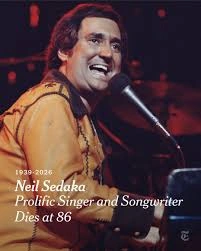
| Died | Still living (as of early 2026) |
| Height | Approximately 5 feet 9 inches (175 cm) |
| Spouse | Leba Strassberg (married 1962) |
| Children | Dara Sedaka, Marc Sedaka |
| Parents | Mac Sedaka (father), Eleanor Sedaka (mother) |
| Genre | Pop, Soft Rock, Adult Contemporary |
| Instruments | Piano, Vocals |
| Active Years | 1957 – Present |
| Notable Song | Breaking Up Is Hard to Do |
| Nationality | American |

Early Life and Family Background
Neil Sedaka was born on March 13, 1939, in Brooklyn, New York. He grew up in the Brighton Beach neighborhood, a vibrant and culturally rich area that would leave a lasting mark on his creative spirit.
His parents, Mac and Eleanor Sedaka, were a working-class couple. His father worked as a taxi driver and his mother was deeply passionate about the arts. That artistic energy passed straight to young Neil. From a very early age, it was clear that this child had an extraordinary gift.
By the time Neil was nine years old, he was already studying classical piano. His talent was so evident that he earned a scholarship to the prestigious Juilliard School of Music in New York City. That’s not something that happens to just any kid. That kind of recognition speaks volumes about his natural ability.
He grew up in a neighborhood full of other creatively gifted young people. One of his closest childhood friends and early collaborators would go on to become a legendary music figure as well. This early exposure to collaboration would shape Neil’s entire approach to songwriting.
Scary Movie Complete Season Review: Every Film Ranked, Rated and Brutally Honest (2000–2026)
The Rise of a Songwriting Star
Neil didn’t just become a singer he became a songwriter first. While still a teenager, he began writing songs with his childhood friend Howard Greenfield. Together, they formed one of the most productive songwriting partnerships in the history of American pop music.
Their songs found a home with some of the biggest artists of the late 1950s and early 1960s. Before Neil ever became a household name as a performer, his music was already being heard by millions of people.
He signed with a major music publishing firm and quickly developed a reputation for crafting melodies that were impossible to forget. His classical piano training gave his compositions a sophistication that most pop songs of the era simply didn’t have.
This combination of formal training and raw pop instinct made Neil Sedaka genuinely unique in the music world.

Neil Sedaka’s Career: From Teen Idol to Timeless Legend
The Early Chart Success
Neil’s first major breakthroughs came in the late 1950s and early 1960s. He released a string of hit singles that climbed the pop charts and turned him into a genuine teen idol. Songs like Breaking Up Is Hard to Do became massive cultural touchstones.
Breaking Up Is Hard to Do is particularly fascinating because Neil actually recorded it twice once as an upbeat, bouncy pop tune in 1962 and again in the early 1970s as a slow, romantic ballad. Both versions became top-ten hits, which is an incredibly rare achievement in pop music history.
That kind of longevity doesn’t happen by accident. It happens when a songwriter understands emotion deeply and can translate it into music that resonates across generations.
The Quiet Years
Like many artists of his generation, Neil Sedaka went through a period in the late 1960s when his commercial popularity in the United States dipped. The British Invasion had changed the musical landscape completely and American pop singers of the early 1960s suddenly found themselves out of fashion.
But Neil didn’t give up. He kept writing, kept performing and found a loyal audience in the United Kingdom during this period. His time performing in the UK, including appearances on programs like The Rolf Harris Show, helped him maintain his career momentum and build a strong fan base overseas.
This period is a great reminder that success isn’t always linear. Neil’s ability to pivot, adapt and find new audiences is one of the most underrated parts of his story.
The Remarkable Comeback
Neil Sedaka’s comeback in the early 1970s is one of the great redemption stories in pop music. With support from industry figures who believed in his talent, he re-emerged with a fresh sound and a new string of hit songs.
He moved to the United Kingdom for a period and released music that immediately connected with audiences. When he brought that renewed energy back to the United States, the American public embraced him all over again.
His success in this era proved that genuine talent doesn’t have an expiration date.

Hit Songs and Musical Legacy
Neil Sedaka has an enormous catalog of songs both as a performer and as a songwriter for others. Here’s a look at some of the most significant musical moments in his career.
Breaking Up Is Hard to Do
Perhaps no song defines Neil Sedaka’s career more than this one. It’s been covered countless times by artists across multiple genres and its melody is instantly recognizable even to people who couldn’t name the artist. The fact that Neil recorded two separate hit versions of the same song is a testament to his mastery of the pop form.
The Songwriting Legacy
Beyond his own recordings, Neil co-wrote songs that became hits for other artists. His work helped shape the sound of American pop music across multiple decades. His melodies were clean, memorable and emotionally direct qualities that made them perfect for a wide range of performers.
He understood instinctively what made a song work and that skill as a craftsman is what separates a good songwriter from a truly great one.
Connections to Other Artists and Shows
Throughout his career, Neil’s music has appeared in a variety of cultural contexts. His work has been referenced, covered and celebrated across television, film and live performance.
The Hermes House Band ft. Tony Christie: (Is This the Way To) Amarillo recording is a fascinating piece of pop history. While Neil Sedaka didn’t write that particular song, it shares a genre and era with his work and the two artists represent a similar golden age of melodic pop that has proven remarkably durable.
Similarly, the Comic Relief 2005: Is This the Way to Amarillo charity performance brought renewed attention to classic pop songwriting of Neil’s era, reminding audiences just how powerful simple, well-crafted melodies can be.

Awards and Recognition
Neil Sedaka’s contributions to music have been acknowledged in numerous ways over the decades. He’s been inducted into the Songwriters Hall of Fame, which is one of the most prestigious honors a music writer can receive. This recognition places him among an elite group of composers who have shaped the sound of popular music.
He’s received Grammy recognition and has been honored by multiple music industry organizations for his decades of contributions.
Beyond formal awards, his real recognition is in the numbers. Millions of records sold. Hundreds of millions of streams in the modern era. Songs that have been covered by artists ranging from country stars to classical pianists.
That kind of reach is its own award.
Personal Life: Spouse, Children and Family
His Marriage to Leba
Neil Sedaka married Leba Strassberg in 1962 and their relationship has stood the test of time in an industry where long marriages are genuinely rare. Leba has been described by those who know the family as a grounding force in Neil’s life and career. Their partnership both personally and professionally has been a cornerstone of his success.
The fact that they’ve remained together for more than six decades is a remarkable achievement and speaks to the depth of their bond.
His Children: Dara and Marc Sedaka
Neil and Leba have two children: Dara Sedaka and Marc Sedaka. Both children have found their own paths in the creative world, which is hardly surprising given the environment they grew up in.
Marc Sedaka in particular has followed his father into the music world, developing his own career as a performer and songwriter. The passing of musical passion from one generation to the next is a beautiful thread in the Sedaka family story.
Dara has also been involved in the arts and entertainment industry in her own way, making the Sedaka family a genuine creative dynasty.
His Parents’ Influence
Neil has spoken warmly about the influence his parents had on his development as an artist. His mother’s love of music, in particular, was something he has credited as a foundational inspiration. Growing up in a home where art was valued made it easier for young Neil to pursue a path that many families might have dismissed as impractical.
Relatives and Extended Family
Neil’s extended family and his broader community in Brooklyn also played a role in shaping his worldview and his music. The cultural richness of his neighborhood gave him exposure to a wide range of musical styles and human stories, all of which eventually found their way into his songwriting.
Neil Sedaka’s Height and Physical Presence
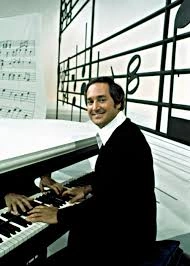
Neil Sedaka stands at approximately 5 feet 9 inches, which is a perfectly average height but there’s nothing average about the way he commands a stage. Anyone who has seen him perform live will tell you that he fills a room with energy and warmth that has nothing to do with physical stature.
His presence at the piano is particularly striking. He moves with the music in a way that shows just how deeply connected he is to what he’s playing. This is someone who doesn’t just perform music he lives inside it.
Trivia: Fascinating Facts You Might Not Know
Here are some genuinely interesting pieces of trivia about Neil Sedaka that even long-time fans might find surprising.
He’s a classically trained pianist. Neil earned a scholarship to Juilliard as a child, which means he studied alongside some of the most technically gifted young musicians in the world. His pop career sits on a foundation of serious classical training.
He wrote hits before he became a hit himself. Many of Neil’s early songs became chart successes for other artists before he established himself as a star performer in his own right. He was shaping the sound of pop music behind the scenes for years.
He had two careers. Most pop artists of the early 1960s faded when the musical landscape shifted. Neil came back for a second, equally successful chapter something that almost never happens in popular music.
His songwriting partner was a childhood friend. The partnership with Howard Greenfield began when they were both teenagers in Brooklyn and lasted for many years, producing dozens of hit songs.
He’s a genuine music historian’s subject. Academics and music scholars regularly cite Neil’s career as an example of the songwriting craft at its highest level. He’s studied in music programs, written about in academic journals and cited as an influence by countless major artists.
New Orleans and New World connections. Throughout his career, Neil has performed across the United States and internationally, building connections to musical communities from Neil Sedaka: New Orleans concert events to international tours that brought his music to entirely new audiences.

Neil Sedaka in Popular Culture
Neil’s reach extends well beyond his own recordings. His music and his story have touched popular culture in numerous ways.
Television Appearances
Beyond his own performances, Neil’s music has appeared on countless television programs over the decades. His association with The Rolf Harris Show in the UK helped him maintain visibility during a period when his US chart success had slowed. This kind of strategic visibility kept him in the public conversation and laid the groundwork for his eventual comeback.
Food Rocks and Entertainment Connections
Neil’s broader entertainment footprint includes connections to various entertainment productions and experiences. Food Rocks, for instance, is a type of entertainment experience that uses music and pop culture in creative ways the kind of cultural crossover that artists like Neil Sedaka made possible by helping establish music as a universal language that could enhance any kind of experience.
The Broader Pop Culture Web
Neil’s music exists in a fascinating web of pop culture connections. Films like Deadpool, Caught Stealing, Better Off Dead and Transsiberian have all used classic pop music to establish mood, era and emotion a tradition that Neil’s generation of songwriters helped establish. When filmmakers want to instantly transport an audience to a specific emotional or temporal space, they often reach for the kind of clean, melodic, emotionally direct pop that Neil Sedaka helped define.
Similarly, the world of gaming and podcasting has developed its own relationship with classic music. Productions like the Uncharted 2: Among Thieves IGN Podcast Beyond have explored how classic music intersects with modern entertainment a conversation that always leads back to the foundational work of songwriters like Neil.
The Art of the Comeback: What Neil Sedaka Teaches Us
If there’s one lesson that Neil Sedaka’s career teaches, it’s that persistence is more powerful than popularity. His story isn’t one of continuous, uninterrupted success. It’s one of peaks and valleys, of staying true to your craft even when the market has moved on.
He kept writing during the quiet years. He kept performing. He kept believing in the value of what he was doing. And when the moment was right, the world caught up with him again.
This is genuinely rare. Most artists who fall out of fashion don’t come back. Neil did and he did it through sheer commitment to quality and craft.
Pros and Cons: An Honest Assessment
Every fair biography review should acknowledge both strengths and areas where things didn’t always work perfectly. Here’s an honest look at Neil Sedaka’s legacy.
Pros
His songwriting catalog is genuinely extraordinary in its breadth and quality. The melodies are clean, memorable and emotionally resonant. His career arc from teen idol to songwriter’s songwriter to comeback king is inspiring in a real, practical way. His personal life, particularly his decades-long marriage, reflects a stability that has clearly supported his creative work.
Cons
There were periods where his commercial work felt formulaic, particularly during the late 1960s when he was struggling to find his footing in a changed musical landscape. Some critics have also pointed out that certain songs from his most commercially driven periods prioritize catchiness over depth. These are minor complaints in the context of a career this long and this productive but a complete review should acknowledge them.
Love Is Blind TV Series: The Ultimate Honest Review (10 Seasons Ranked)
Final Thoughts: A Legacy That Deserves More Celebration
After doing a thorough Neil Sedaka complete biography review, one thing becomes overwhelmingly clear: this man deserves far more credit than popular culture typically gives him.
He’s not just a guy who had a few hit songs in the early 1960s. He’s a classically trained musician, a master songwriter, a performer who survived one of the most dramatic shifts in music history and a family man who built a life that clearly supported everything he created professionally.
His story is, in many ways, the story of American pop music itself full of energy and ambition, tested by change and ultimately resilient in a way that feels genuinely inspiring.
If you haven’t spent time with Neil Sedaka’s catalog recently, do yourself a favor and start. You’ll find melodies that feel as fresh today as they did six decades ago, which is the only real test of timeless music.
That, in the end, is Neil Sedaka’s greatest achievement. Not the awards, not the chart positions, not even the comeback. It’s the music simple, honest and built to last.
FAQs About Neil Sedaka
When was Neil Sedaka born?
Neil Sedaka was born on March 13, 1939, in Brooklyn, New York, USA.
How tall is Neil Sedaka?
Neil Sedaka is approximately 5 feet 9 inches tall, though he’s always been known more for his musical stature than his physical height.
Who are Neil Sedaka’s children?
Neil has two children Dara Sedaka and Marc Sedaka. Marc has followed his father into the music industry as a performer and songwriter.
What is Neil Sedaka’s most famous song?
Breaking Up Is Hard to Do” is arguably his most famous song, made even more remarkable by the fact that he successfully recorded it twice once as an upbeat pop tune and once as a slow ballad and both versions became hits.
Is Neil Sedaka still alive?
Yes, as of early 2026, Neil Sedaka is still living and continues to be active in music.
Who is Neil Sedaka’s spouse?
Neil Sedaka married Leba Strassberg in 1962 and they have remained together for over six decades.
Disclaimer: This article is created for informational and entertainment purposes only. All content is original and based on publicly available information about Neil Sedaka. We make no guarantees regarding the absolute accuracy of biographical facts, dates or career details, as information may change over time. No copyright infringement is intended all names, song titles and associated references belong to their respective owners.