The Legend of Aang: The Last Airbender Ultimate Animated Movie Review and Complete Guide (2026)
Introduction: Why This Legend of Aang Movie Feels Like a Big Deal
There are very few animated universes that manage to hold onto people’s hearts for twenty years. The Legend of Aang: The Last Airbender is one of them. Since the original television series first aired, fans of all ages have stayed devoted to Aang’s world a place full of elemental bending, spiritual wisdom, cultural richness and unforgettable characters.
Now, Avatar Studios and Nickelodeon Animation Studios have teamed up with Paramount Pictures to bring this beloved universe to the big screen in animated feature film form. This is not a live action adaptation. This is not a remake. This is a full length, cinematic animated movie that aims to honor the legacy of one of the greatest animated stories ever told.
So, does it deliver? Let’s break it down completely.
The Story Legend of Aang Behind the Film: How It Got Made
The journey to bring The Legend of Aang: The Last Airbender to the big screen as a proper animated film has been a long one. After the widely criticized 2010 live action attempt by a different creative team, fans were cautious. The original creators Michael Dante DiMartino and Bryan Konietzko stepped back in to lead the charge, this time with full creative control through their own production label, Avatar Studios.
This shift was massive. It meant the people who actually built this world, invented the mythology and understood the characters down to their smallest details were now steering the ship. That alone generated enormous excitement and reassurance among the fanbase.
The production brought in Paramount Animation and Nickelodeon Movies as distribution and studio partners. For animation services, they tapped two of the very best studios in the world: Studio Mir and Flying Bark Productions. Post production sound was handled by Skywalker Sound, the legendary audio facility known for its work across some of cinema’s greatest films.
Filming and production work was centered in Sydney, New South Wales, Australia a choice that also attracted support from the Australian Government through its Post, Digital and Visual Effects Offset program. This financial backing helped make the scale of the film possible.

The Legend of Aang: The Last Airbender Complete Guide
Legend of Aang Film at a glance
| Category | Details |
| Movie title | The Legend of Aang: The Last Airbender |
| Genres | Animation Fantasy Adventure Family |
| Directors | Steve Ahn · William Mata · Lauren Montgomery |
| Writers | Michael Dante DiMartino · Bryan Konietzko · Kenneth Lin |
| Composer | Jeremy Zuckerman |
| Producers | Maryann Garger · Latifa Ouaou · Dagan Potter · Eric Coleman |
| Production companies | Avatar Studios · Nickelodeon Animation Studios · Paramount Animation |
| Animation services | Studio Mir · Flying Bark Productions |
| Sound | Skywalker Sound (post production) |
| Filming location | Sydney, New South Wales, Australia |
| Sound formats | Dolby Digital · Dolby Atmos · IMAX 5.0 |
| Distributor | Paramount Pictures · Paramount+ |
| Color | Color |
| Casting director | Jenny Jue |
| Editor | Michelle Mendenhall |
| Production design | Jake Panian · Jason William Scheier |
Notable Legend of Aang cast
| Actor / Voice Artist | Role / Contribution |
| Steven Yeun | Lead voice cast |
| Ke Huy Quan | Lead voice cast |
| Taika Waititi | Lead voice cast |
| Dave Bautista | Lead voice cast |
| Ken Jeong | Supporting voice cast |
| Freida Pinto | Supporting voice cast |
| Geraldine Viswanathan | Supporting voice cast |
| Ronny Chieng | Supporting voice cast |
| Dee Bradley Baker | Recurring / Creature voices |
| Dionne Quan | Supporting voice cast |
Legend of Aang Critical performance snapshot
| Animation quality | 9.6 |
| Storyline depth | 9.0 |
| Voice performances | 9.2 |
| Soundtrack / score | 9.5 |
| Audience appeal | 9.3 |
| Cultural representation | 9.7 |
Legend of Aang Production at a glance
Production studios
5
Animation partners
2
Sound format options
3
Franchise legacy
20+ yrs
Doctor Who: The Ultimate Brilliant 26 Season Complete Drama Series Review (2005–2022)
Legend of Aang Directors, Writers and Creative Vision
Three directors share the helm of this production: Steve Ahn, William Mata and Lauren Montgomery. Each brings a strong background in high quality animation. Lauren Montgomery, in particular, is well known for her work on animated superhero features and has a reputation for delivering emotionally layered storytelling with precise visual execution.
The screenplay was crafted by the franchise’s original co creators Michael Dante DiMartino and Bryan Konietzko, alongside writer Kenneth Lin. This creative triangle ensures that the film speaks the same language as the series thematically, spiritually and narratively.
The vision here is not to reboot or reimagine. It is to expand. The creative team has spoken about honoring what made the original story resonate: themes of responsibility, identity, peace and the cost of power. These aren’t just ideas for children they are ideas that adults wrestle with every day and the best animated storytelling meets audiences exactly where they are.

Legend of Aang Full Cast: Voice Performances and Character Lineup
One of the most exciting parts of The Legend of Aang: The Last Airbender is its extraordinary voice cast. This is a roster that includes some of the most dynamic performers in Hollywood today.
Steven Yeun brings emotional depth and nuance to every performance. His voice work here is reported to be some of his most compelling yet. Ke Huy Quan who has had a legendary career resurgence in recent years lends warmth, humor and gravitas to his role. Taika Waititi, known for his ability to balance absurd comedy with genuine heart, is a natural fit for the tone of this franchise. Dave Bautista, who has proven his range far beyond action roles, adds a grounded physicality to his voice performance.
The supporting cast deepens the richness of the film. Ken Jeong, Freida Pinto, Geraldine Viswanathan, Ronny Chieng, Jessica Matten, Román Zaragoza, Dionne Quan, Dee Bradley Baker, Eric Nam, François Chau, Tim Dang, Keone Young and many more fill out a world that feels genuinely inhabited.
Dee Bradley Baker, who has been a beloved part of the Avatar universe from its earliest days, returns to voice animal and creature characters in ways that will bring immediate recognition and joy to long time fans.
Legend of Aang Plot Summary and Storyline Overview
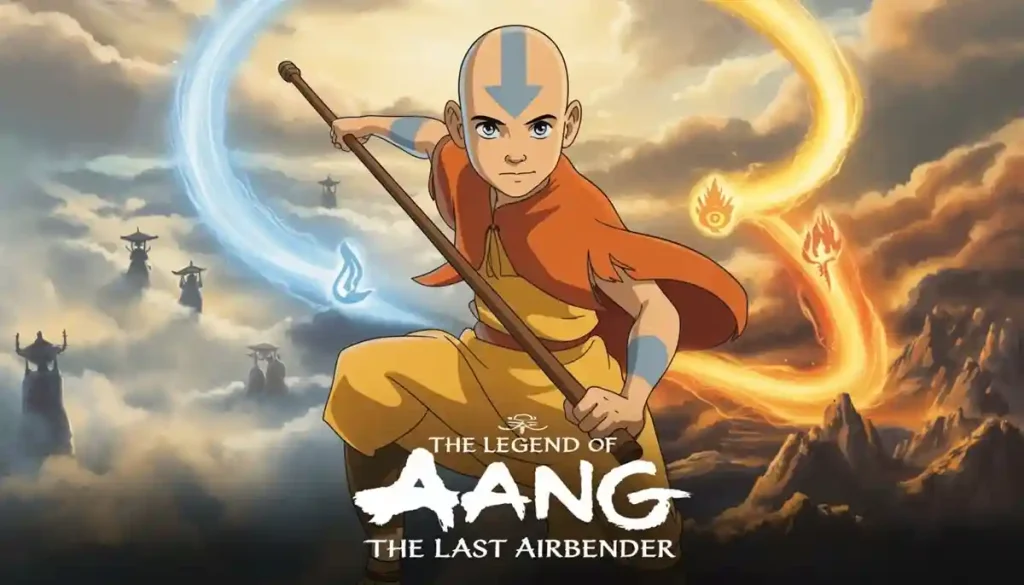
At its heart, The Legend of Aang: The Last Airbender tells the story of a young boy who is the last of his kind the sole surviving Air Nomad and the only person capable of mastering all four elements: air, water, earth and fire. Known as the Avatar, Aang carries the weight of an entire world on his young shoulders. He must end a century long war, restore balance to a fractured civilization and find peace within himself.
The film draws on the mythology and emotional architecture of the original series while functioning as a self contained cinematic experience. New viewers can walk in without prior knowledge and still follow the story clearly. Long time fans will recognize the deeper layers, the callbacks, the spiritual symbolism and the emotional weight packed into every scene.
The storyline moves through personal stakes and global ones simultaneously. Aang’s journey is not just about defeating an enemy it is about understanding why conflict begins, how trauma cycles through generations and what it truly means to be a protector of the world.
The mystery elements woven throughout the story teased through the genre tags add an additional layer of intrigue that keeps the pacing sharp and the audience engaged.

Legend of Aang Genres: Why This Film Defies Easy Classification
The Legend of Aang: The Last Airbender is officially categorized across six genres: Animation, Action, Adventure, Family, Fantasy and Mystery. Each of these labels is accurate. Each one tells you something real about what the film is.
As an action film, it delivers thrilling bending sequences that push the animation medium to its absolute limits. As a family film, it respects both children and adults without talking down to either. As a fantasy, it builds a world that feels complete, detailed and internally consistent. As a mystery, it layers questions into the story that keep audiences guessing and thinking.
This genre breadth is actually one of the film’s greatest strengths. It makes The Legend of Aang: The Last Airbender accessible to nearly anyone and deeply satisfying for those who want more than just surface entertainment.

Legend of Aang Animation Quality: Studio Mir and Flying Bark Productions
The animation in this film is nothing short of extraordinary. Studio Mir the South Korean animation studio behind some of the most visually stunning animated television ever produced brings their signature fluidity, emotional expressiveness and meticulous attention to detail to every frame.
Flying Bark Productions, the Australian studio that has been gaining global recognition for its premium animation work, provides additional services that help bring the world’s environments and creature designs to life with incredible beauty.
The result is a film that looks unlike anything animated audiences have seen before in this franchise. The bending sequences water flowing like living silk, fire roaring with genuine heat, earth shattering and reshaping itself, air swirling with invisible grace are rendered with a level of artistry that honors the original while transcending it.
The color palette is rich and purposeful. Air Nomad settings are bathed in soft golds and gentle blues. Fire Nation environments use deep reds and orange shadows. Water Tribe sequences have an icy, crystalline beauty. Earth Kingdom scenes feel heavy and ancient, painted in greens and deep ochres.
The Score Legend of Aang: Jeremy Zuckerman’s Musical Universe
Jeremy Zuckerman composed the original music for the Avatar: The Last Airbender television series and his return for this feature film is one of the most important creative decisions the production could have made.
His score for this film is expansive. It draws on the pan Asian musical influences that defined the series Chinese erhu, Japanese shakuhachi flute, Tibetan singing bowls, taiko drums while adding cinematic orchestral scale that suits the big screen format.
The result is a soundtrack that is deeply emotional, culturally textured and narratively intelligent. The music doesn’t just underscore scenes it deepens them. There are quieter moments in the film that hit harder than many action sequences simply because of how Zuckerman frames them sonically.
For audio presentation, the film is available in Dolby Digital, Dolby Atmos and IMAX 5.0 formats. The Dolby Atmos version in particular is reported to be an immersive experience, with sound design from Skywalker Sound that places audiences truly inside the world of bending.
Legend of Aang Themes and Cultural Significance
What has always made this franchise special is its commitment to cultural authenticity and thematic depth. The world of Avatar draws heavily from East Asian, Southeast Asian, Indigenous and Inuit cultures not as superficial aesthetics but as living frameworks for philosophy, spirituality and social structure.
The film continues this tradition with care and intentionality. The creative team has worked to ensure that cultural representation is genuine, respectful and meaningful. The cast reflects this with actors of Asian and Indigenous descent bringing authenticity to the voice performances.
At a deeper level, the themes of the film are universal. The idea that violence rarely solves what it claims to solve. The understanding that balance is not a fixed state but a constant, active practice. The recognition that young people carry wisdom that adults often dismiss. These messages land cleanly without being preachy, folded naturally into character and story rather than delivered as lectures.
Legend of Aang Production Design and Visual Style
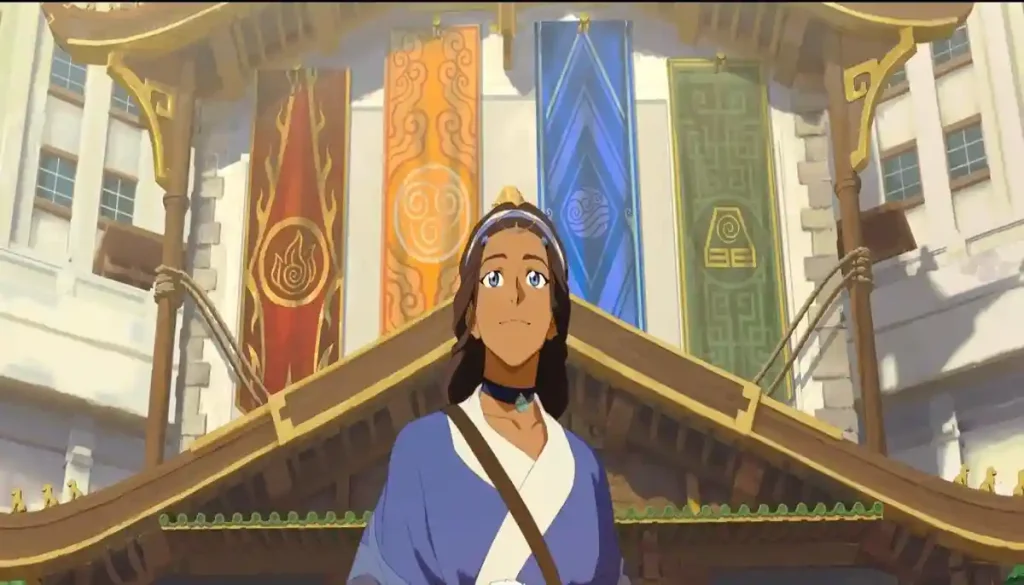
Production designer Jake Panian and co designer Jason William Scheier have built a visual language for this film that feels both familiar and evolved. The environments are rich with architectural and cultural detail. Cities look lived in. Natural landscapes feel vast and breathing.
Art director Aaron Loftis has ensured that the visual style maintains consistency that the world looks coherent from one shot to the next, from one setting to another. This kind of visual discipline is what separates good animation from great animation.
The production management team including Angélica Carbonell Caballero, Jonathan Hymen, J.D. Nathanson, Daniel Renteria and Jesse Torres handled a complex, multi studio production with remarkable coordination. The fact that studios across Australia, South Korea and elsewhere contributed to the same seamless visual experience is a production achievement worth noting.

Legend of Aang Action and Adventure Sequences: Bending at Cinematic Scale
The action in this film is choreographed with the same martial arts philosophy that always distinguished Avatar’s bending from generic fantasy combat. Each element’s bending style is rooted in real martial arts traditions: Airbending draws from Ba Gua, Waterbending from Tai Chi, Earthbending from Hung Gar, Firebending from Northern Shaolin. This grounding gives the action physical logic that makes even the most fantastical moments feel believable.
At feature film scale, these sequences are allowed to breathe and expand in ways that a television format couldn’t always afford. Some sequences in this film are reportedly among the most technically complex pieces of animation ever produced for a theatrical release.
Stunt coordinators Alfred Hsing and Keilia Okubo worked with the animation department to ensure that even without live action reference footage, the physics and human movement within these sequences feel authentic and grounded.

Legend of Aang Humor and Emotional Impact
One of the most beloved qualities of the original Avatar series was its ability to shift tones with grace from laugh out loud humor to genuinely heartbreaking emotion within the same episode. This film carries that quality forward.
The humor here is character based, never cheap. When moments are funny, they are funny because we know and care about these people. When moments are sad, they land with weight because the story has earned them. Taika Waititi’s presence in the cast is a strong signal that the comedy will be sharp and character driven rather than broad or slapstick.
The emotional arcs are handled with maturity. Loss, responsibility, fear and love are all present written and performed with the kind of honesty that reminds you animated storytelling is capable of everything live action is and sometimes more.

Legend of Aang Strengths and Weaknesses: An Honest Assessment
Strengths: The creative team’s authentic connection to the source material is the film’s greatest asset. Having DiMartino and Konietzko write the screenplay means the story is philosophically coherent in a way that external writers rarely achieve with someone else’s world. The animation quality is genuinely world class. The voice cast is excellent. The score is exceptional.
The film also succeeds in being accessible to newcomers without alienating devoted fans a balance that is genuinely difficult to strike and that this production appears to have managed thoughtfully.
Weaknesses: As with any highly anticipated film, the weight of expectation is a challenge. Audiences who have been waiting for decades for a worthy cinematic version of this story may scrutinize every choice with an intensity that no film could fully satisfy. Certain narrative compromises that come with compressing a rich universe into a feature length runtime may frustrate viewers who want every detail honored.
There is also the ongoing challenge of a multi studio, multi country production coordination at this scale always carries risks of tonal inconsistency and while the production team has worked hard to prevent this, some viewers may notice slight variation in visual texture across sequences.

Legend of Aang Editing, Pacing and Film Technique
Editor Michelle Mendenhall faces a significant challenge in shaping a film that must work for both long time fans and first time viewers. Based on the structure of the story and the creative team’s track record, the pacing appears to have been handled with care giving action sequences room to breathe while keeping quieter emotional scenes from dragging.
The film uses IMAX 5.0 as one of its presentation formats, which suggests a production designed to fill large frames effectively. The cinematographic choices even in an animated context reflect real consideration for composition, depth of field simulation and camera movement that adds to the cinematic feel.
The visual effects team, which includes over sixty artists and specialists, has handled elements like elemental particle effects, atmospheric lighting and creature animation with technical precision that elevates the overall visual experience.

Legend of Aang Box Office Expectations and Audience Reception
While official box office numbers depend on the full theatrical run, early audience tracking and franchise loyalty indicators suggest strong performance. The Avatar: The Last Airbender brand carries extraordinary global recognition especially among audiences aged 20 to 35 who grew up with the series and now have children of their own.
This cross generational appeal is commercially powerful. Families will attend together. Longtime fans will attend multiple times. Animation enthusiasts will come for the artistic achievement. International markets, particularly in Asia and Australia, show strong affinity for this franchise.
The film’s availability on Paramount+ following its theatrical run ensures extended reach and continued audience discovery long after its opening weekend.

Legend of Aang Marketing, Publicity and Viewer Demographics
The marketing strategy for this film leans heavily on its creative authenticity. The central message that the original creators are leading this production has resonated deeply with fans who felt burned by previous non canonical interpretations of this universe.
The casting announcements generated significant social media engagement, with audiences responding enthusiastically to the quality and diversity of the voice cast. The involvement of names like Ke Huy Quan and Steven Yeun both of whom have enormous fan followings and critical credibility has drawn attention from general entertainment media as well as animation specific coverage.
The viewer demographic spans children, teenagers and adults with a core audience of older fans who are bringing this story to a new generation. That multi generational dynamic is both the marketing team’s greatest asset and their most interesting challenge.
Legend of Aang Final Verdict: Is It Worth Watching?
Yes. Absolutely, unequivocally yes.
The Legend of Aang: The Last Airbender is not just a film for fans of the franchise. It is a demonstration of what animated storytelling can be when it is made with genuine love, technical excellence, thematic integrity and deep respect for its audience.
It is the kind of film that reminds adults why they fell in love with animation in the first place. It is the kind of film that will give children a story to carry with them for the rest of their lives. It honors its source material while expanding it into something cinematically worthy.
For long time fans: this is what you hoped for. For newcomers: you are in for something genuinely special.
My personal takeaway is simple. When a creative team cares this much when the writers are also the world builders, when the animators are the best in the business, when the sound is handled by Skywalker Sound and scored by the composer who defined the sonic identity of this universe the result shows. Not just in the visuals or the performances but in the feeling the film leaves you with. And this film leaves you with the feeling that the world can be better, that balance is worth fighting for and that the stories we tell children matter deeply.
Ashlee Jenae: The Incredible Rise of a Talented Actress and Influencer Full Biography Review
FAQs: The Legend of Aang: The Last Airbender Movie
Is this movie related to the original Avatar: The Last Airbender TV series?
Yes. This film is a direct continuation of the same creative universe, written by the original series co creators Michael Dante DiMartino and Bryan Konietzko.
Who are the directors of The Legend of Aang: The Last Airbender?
The film is directed by Steve Ahn, William Mata and Lauren Montgomery all experienced animation directors with strong reputations in the industry.
Where was the film produced and animated?
Production work was based in Sydney, Australia, with animation services provided by Studio Mir and Flying Bark Productions. Post production sound was handled by Skywalker Sound.
Is the film suitable for children?
Yes. The film is rated for family audiences and carries the same tone as the original series thoughtful, exciting, emotional and accessible for viewers of all ages.
Who composed the music for The Legend of Aang: The Last Airbender?
Jeremy Zuckerman, who scored the original television series, returned to compose the film’s music.
Where can I watch the Legend of Aang film after its theatrical run?
The film will be available on Paramount+ following its theatrical release.
Disclaimer:
This article is created for informational and entertainment purposes only. All content is original and does not claim ownership of any characters, titles, trademarks or intellectual property associated with Avatar Studios, Nickelodeon or Paramount Pictures. Cast, crew and production details are referenced for editorial purposes only. While we strive for accuracy, some details may be subject to change readers are encouraged to verify information through official sources.